Module 1: The Wedding Coach: Role, Scope & the Coaching Difference
Understanding what a wedding coach does and where the role begins and ends
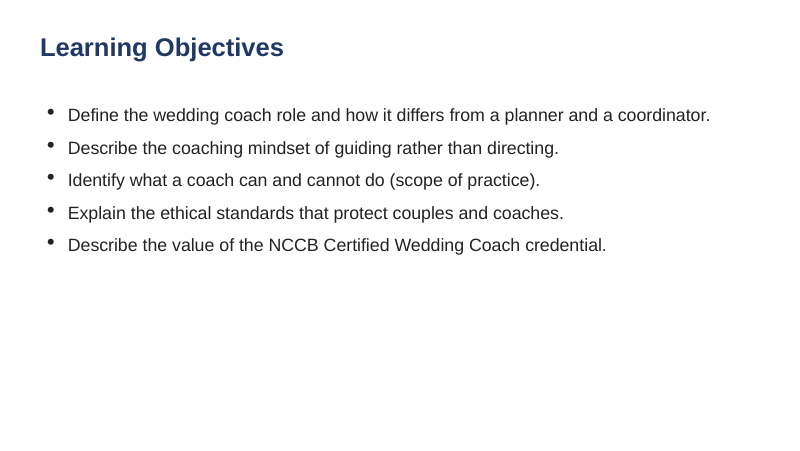
Learning Objectives — Chapter 1
Upon completing this chapter, you will be able to:
-
Define the wedding coach role and explain how it differs from a planner and a day-of coordinator.
-
Describe the coaching mindset of guiding couples rather than directing them.
-
Identify what a wedding coach can and cannot do (scope of practice).
-
Explain the ethical standards that protect both the couple and the coach.
-
Describe the value of the NCCB Certified Wedding Planner Coach credential and the careers it can open.
Picture a couple sitting at their kitchen table three months before their wedding. The table is covered with printouts, sticky notes, and two open laptops. They are not fighting, but they are not smiling either. They have a budget they are afraid to look at, a guest list that keeps growing, and a long string of texts from family members with strong opinions. What they need is not another website telling them the “top ten flowers for fall.” What they need is a calm, steady guide who can help them think clearly, make good choices, and feel confident again.
That guide is a wedding coach.
A wedding coach blends two skills that usually live in different worlds. The first is the planning skill of the wedding professional, who knows venues, vendors, budgets, and timelines. The second is the people skill of the coach, who knows how to listen, ask good questions, and help others reach their own decisions. Put those two together and you get a professional who can manage the details of a wedding and support the human beings living through it.
This chapter sets the foundation for everything that follows. Before you learn how to build a budget or run a wedding day, you need to understand the job itself: what a wedding coach is, how the role is different from a planner or a coordinator, and where the edges of the role lie. Knowing those edges is what keeps you professional, protects your clients, and builds the kind of trust that turns one happy couple into ten new referrals. Get the role right, and every skill you add later has a strong place to stand.