1.3 The Floral Industry Today
To understand your job, it helps to understand the business around it. Flowers are a product that travels a long way and does not last forever. That single fact shapes almost everything about how the industry runs, from prices to schedules to the way you care for stems.
From farm to shop: the supply chain
A supply chain is the path a product takes from where it is made to where it is sold. For flowers, that path usually starts on a farm, often in another country with a warm climate. The flowers are cut, cooled, and packed while they are still fresh. They travel by truck and plane to a wholesaler, which is a business that buys flowers in large amounts and sells them to shops. Your shop buys from the wholesaler, and then you sell finished designs to the customer.
Think of it like a relay race. Each runner must move quickly and hand off cleanly, or the whole team loses time. With flowers, lost time means lost freshness. Every stop on the path keeps the flowers cold to slow them down and keep them alive. This is called the cold chain, and when it breaks, flowers age fast. As a designer, you are the last runner in the race. The care you give when flowers arrive can add days to their life, and the care you skip can take days away.
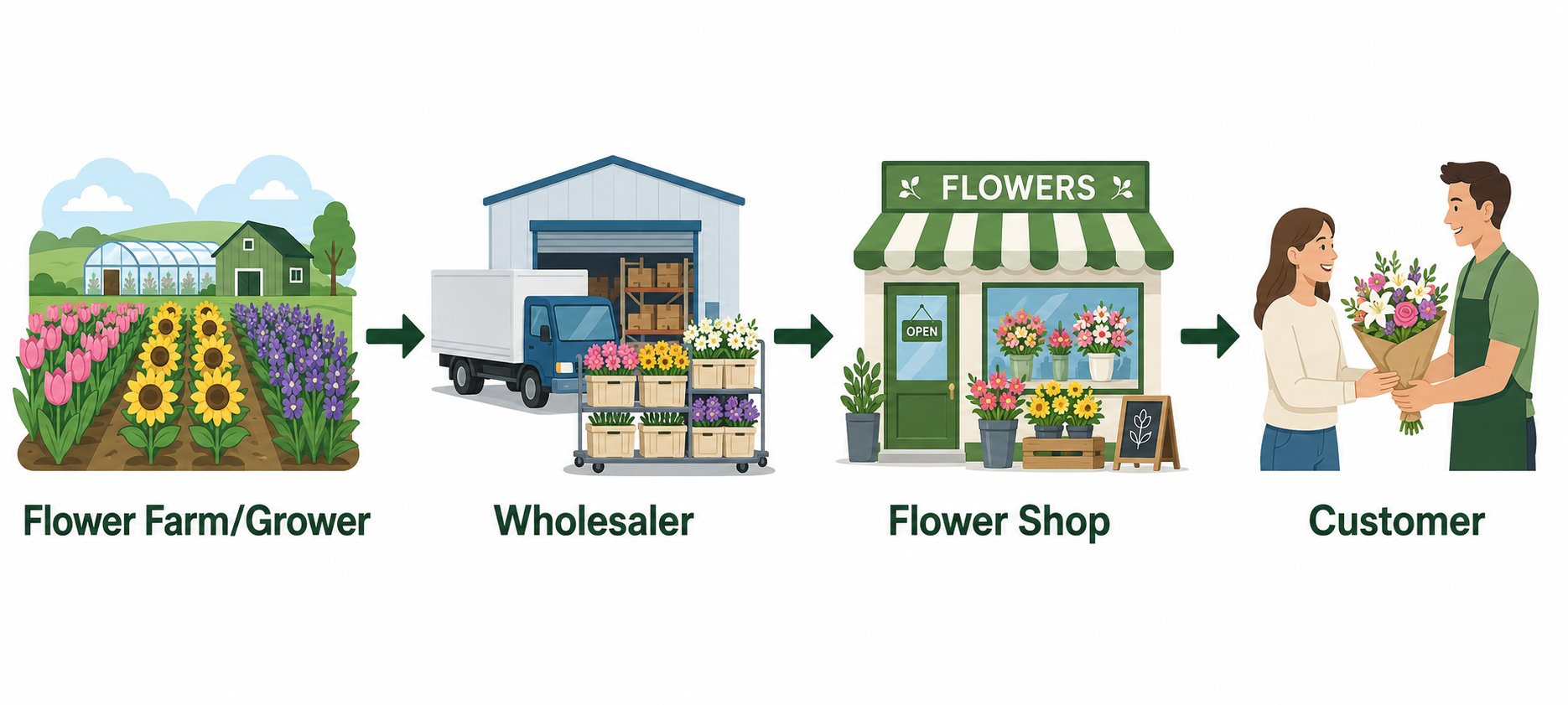
Figure 1.3. How flowers travel from farm to customer.
Seasonal and holiday demand
Demand means how much customers want to buy. In the flower business, demand rises and falls with the seasons and the calendar. Certain flowers grow best in certain seasons, so they are cheaper and fresher then. A flower that is out of season must travel farther or grow in special conditions, which makes it cost more and sometimes look weaker. We cover seasonality in Chapter 2.
The calendar also drives demand through holidays. A few days each year bring huge waves of orders. Valentine’s Day is the biggest single day for many shops, followed by Mother’s Day. Weddings cluster in the warmer months. Sympathy work can come at any time. A smart shop plans staffing, ordering, and hours around these waves. As an associate, you will feel these busy seasons in your feet and your hands, and you will also learn the most during them, because you build so much in a short time.
How technology changed the flower shop
The flower business has always been about fresh product and caring service, but the way orders arrive has changed. Today many customers order online or by phone, sometimes from another state, and expect a design to be delivered the same day. Shops also work with wire services, which are networks that let a customer in one city send flowers through a shop in another city. This means the design you build might be for a customer you never meet, based only on a photo and a note. It makes your craft even more important, because the arrangement itself has to carry the whole message. Learning to build to a photo, work from clear order notes, and keep quality high for every order, seen or unseen, is part of the modern job.
Design in Practice — Maria’s First Valentine’s Week
Maria took a job at a grocery floral department in January. For three weeks the work felt calm, and she wondered if she would ever get faster. Then Valentine’s week arrived. Orders for dozen-rose arrangements poured in, and Maria built more bouquets in five days than she had in her entire first month.
By the end of the week her hands ached, but something had changed. She could spiral a bouquet without thinking about it, and she had learned to keep the cooler stocked before it ran low. Her manager noticed and asked her to help train the next new hire. Maria realized the busy season had not just tested her. It had turned her into a real designer.