1.1 What Is Floral Design?
Floral design is the art and skill of arranging fresh flowers, plants, and greenery into pieces that look good and carry meaning. That sounds simple, but there is a lot packed into it. A floral designer is part artist, part craftsperson, and part helper. You use your eye for color and shape like an artist. You use your hands and tools like a craftsperson. And you use your ears and your kindness like a helper who wants each customer to feel understood.
A good way to picture it is to think of a cook. A cook does not just throw food on a plate. A cook chooses ingredients, follows steps, and plates the meal so it looks as good as it tastes. A floral designer works the same way. You choose flowers, follow trusted methods, and finish the piece so it looks polished. The flowers are your ingredients, and the arrangement is the meal.
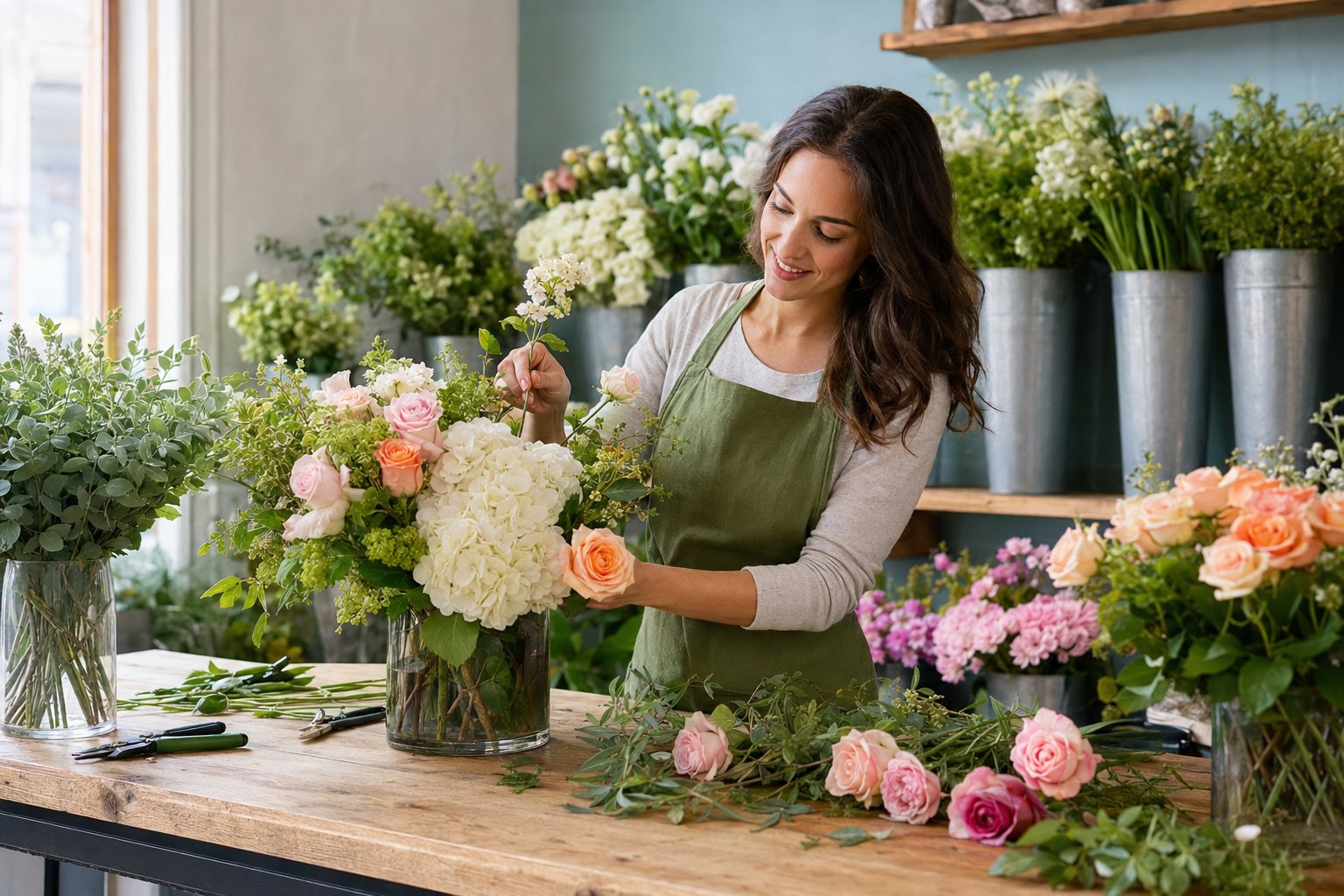
Figure 1.1. A floral design associate arranging flowers at a shop worktable.
Art, craft, and service together
It helps to break floral design into three parts. The first part is art. Art is the creative side, where you decide which colors go together, how tall the design should be, and what feeling you want it to give. The second part is craft. Craft is the hands-on skill, such as cutting stems the right way, using floral foam, and building a design that will not fall apart on the drive home. The third part is service. Service is the people side, where you ask questions, listen well, and help a customer get what they truly want, even when they are not sure how to say it.
Many beginners think floral design is only about art. They picture a designer dreaming up beautiful shapes all day. Art matters, but the craft and the service matter just as much. A stunning arrangement that wilts by morning has failed at craft. A perfect arrangement that is the wrong color for the event has failed at service. The best designers keep all three parts in balance.
It also helps to clear up a few myths. You do not need to be born artistic to do this work, because design follows rules you can learn, and we teach them in Chapters 5 through 7. You do not need to know the name of every flower on day one, because you will learn them by handling them week after week. And you do not need perfect, steady hands like a surgeon. You need care, practice, and a willingness to redo a piece when it is not right. Almost every skilled designer you will ever meet was once a nervous beginner who built a lopsided first bouquet.
Designer’s Tip
When you look at any arrangement, ask yourself three quick questions: Does it look good? Is it built to last? Does it fit what the customer needs? If you can answer yes to all three, you are thinking like a professional.
The role of a floral design associate
A floral design associate is an entry-level to mid-level worker in a flower shop, a floral department, or a design studio. The word associate simply means you are a team member who does the daily work of the shop. You are not only arranging flowers. You are also caring for them, helping customers, taking orders, and keeping your workspace clean and safe.
Your exact duties depend on where you work, but most floral design associates do a mix of these tasks. You process and condition fresh flowers when they arrive. You build arrangements from a recipe or a customer request. You help customers pick flowers for birthdays, sympathy, weddings, and everyday gifts. You wrap and price finished pieces. You keep the cooler organized and the work area tidy. And you often help with deliveries, displays, and phone or online orders.
Notice how much of that list is not arranging. That surprises many new designers. In a busy shop, you might spend more time caring for flowers and helping customers than building bouquets. This is normal and important. Healthy flowers and happy customers are what keep a shop open, and both depend on you.
A day in the life
Let us walk through a typical day so the job feels real. You arrive in the morning and check the cooler. A flower delivery came in, so you unpack it, cut the stems, and place the flowers in clean water with flower food. This is called conditioning, and we cover it fully in Chapter 4. While the flowers drink, you check the day’s orders. There are three birthday arrangements, one sympathy piece, and a pickup order for a dozen roses.
By mid-morning you are building. You follow the shop’s recipe for the birthday designs, but you add your own touch with the filler flowers. A walk-in customer arrives looking for something for a new baby. You ask a few questions, learn the baby is a girl, and guide the customer to soft pinks and whites. You build a small, cheerful arrangement while you chat, and the customer leaves smiling.
In the afternoon, deliveries go out and you refresh the front display so the shop looks fresh for evening customers. You clean your tools, sweep the stems off the floor, and restock supplies for tomorrow. It is steady work that mixes quiet building time with bursts of customer contact. Some days are calm. Around holidays like Valentine’s Day and Mother’s Day, the same day can feel like a race. Both kinds of days are part of the craft.
Pause and Reflect
Which part of a floral designer’s day sounds most exciting to you right now: the creative building, the flower care, or the time with customers? There is no wrong answer. Knowing what draws you in can help you find the right kind of shop later.
Check yourself
Which three parts work together in floral design?
- A. Buying, selling, and shipping
- B. Art, craft, and service
- C. Cutting, cooling, and cleaning
- D. Farming, wholesale, and retail
Show answer
B. Art, craft, and service
Check yourself
What does a floral design associate spend much of the day doing, besides arranging?
- A. Only answering phones
- B. Caring for flowers and helping customers
- C. Managing the whole company
- D. Growing flowers on a farm
Show answer
B. Caring for flowers and helping customers