1.2 How the Edibles Industry Grew
Not long ago, cannabis edibles were mostly homemade and sold quietly. Today, they are a major part of a large and growing legal industry. As more states allowed cannabis for medical and adult use, demand for safe, well made edibles climbed fast. Edibles are now one of the most popular ways people choose to use cannabis, because they are easy to use, easy to carry, and do not require smoking.
This growth created a new problem and a new opportunity. The problem is that making edibles safely, at a large scale, takes real skill. Companies cannot just hire anyone; they need people who understand dosing, food safety, and the rules. The opportunity is for you. Trained edibles professionals are in demand, and that demand is what makes this career worth building.
The market keeps changing, too. New product types, like fast acting drinks and low dose gummies for beginners, appear all the time. That means there is always something new to learn and room for fresh ideas. Throughout this book, we will treat the edibles business as exactly that: a serious, professional industry. The habits you build now, like careful measuring and clean record keeping, are the same habits that successful companies look for. Start practicing them early and they will feel natural by the time you are on the job.
The Four Skills You Will Build
The CCEP credential rests on four core skills. I like to picture them as four pillars holding up a roof. If any pillar is weak, the whole structure is shaky. Here are the four skills you will build in this book.
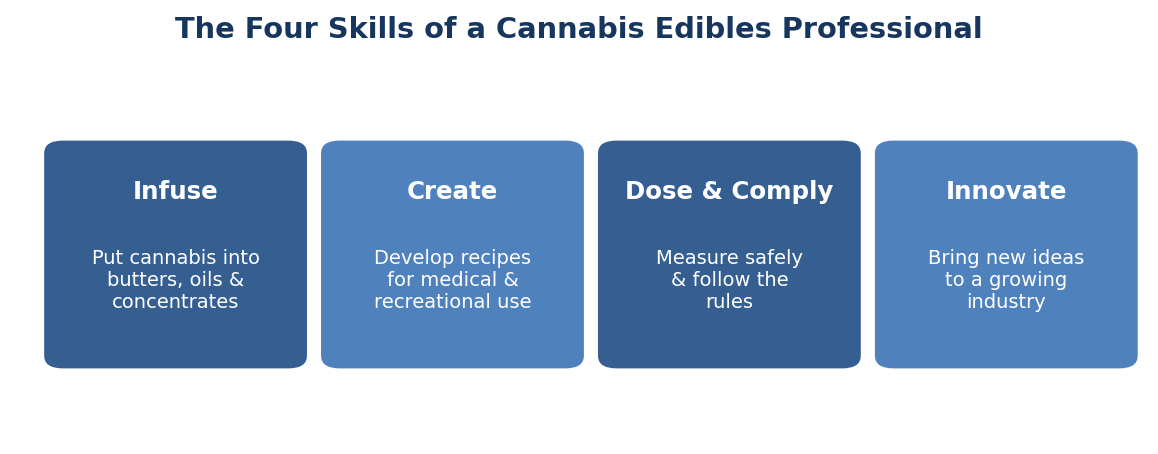
First is infusion. This is how we get cannabis into a usable form, like infused butter or oil. We will cover the science and the steps in Chapters 4 and 5. Second is creating recipes. This is where you turn infused ingredients into real products for medical or recreational customers, which we explore in Chapters 6 and 8. Third, and most important, is dosing and compliance. This is the math and the rules that keep products safe and legal, and we give it extra attention across several chapters. Fourth is innovation, which means bringing fresh, smart ideas to a growing field. Every chapter adds a little to one or more of these pillars.
Where Cannabis Edibles Professionals Work
One of the best things about this career is that your skills travel. Once you know how to make safe, well dosed edibles, several doors open. Let us look at the three most common places you might work.
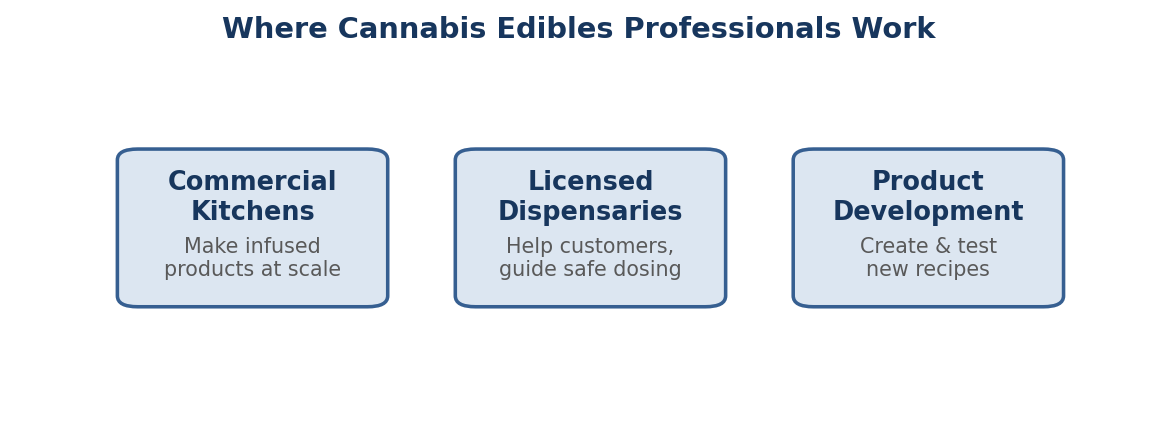
Commercial kitchens are where infused products are made in larger amounts. If you enjoy hands on cooking and want to produce real products, this may be your home. You might measure infusions, run equipment, follow recipes exactly, and keep careful records of every batch. The kitchen is also where many people start their careers, because it builds the hands on skills that every other role is based on.
Licensed dispensaries are stores that sell cannabis products to customers. Here, your edibles knowledge helps you guide people to the right product and the right dose. A customer who has never tried an edible needs clear, calm advice, and you will be ready to give it. Your understanding of dosing can prevent a bad experience and build a loyal customer. Good guidance is not just kind; it is good business, because customers return to people they trust.
Product development is the creative side of the field. These teams design and test new edibles, from a new gummy flavor to a fast acting drink. If you like to experiment, solve problems, and improve products, this path can be a great fit. It often grows out of strong kitchen experience, so do not worry if it feels far away right now. Many product developers started by mixing batches in a kitchen and asking, “How could this be better?”